

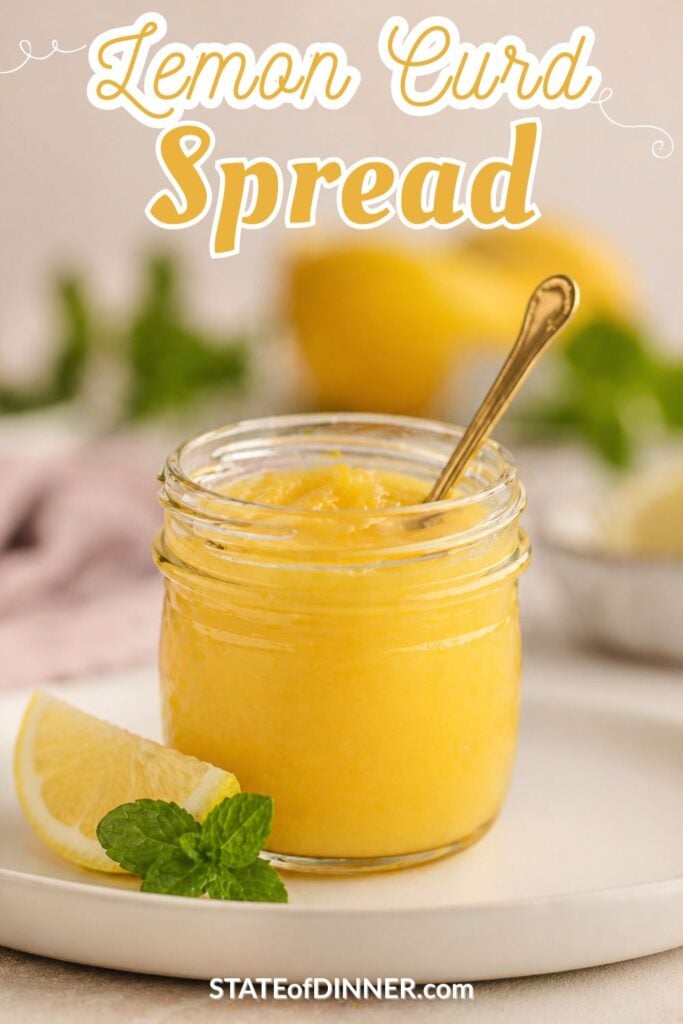
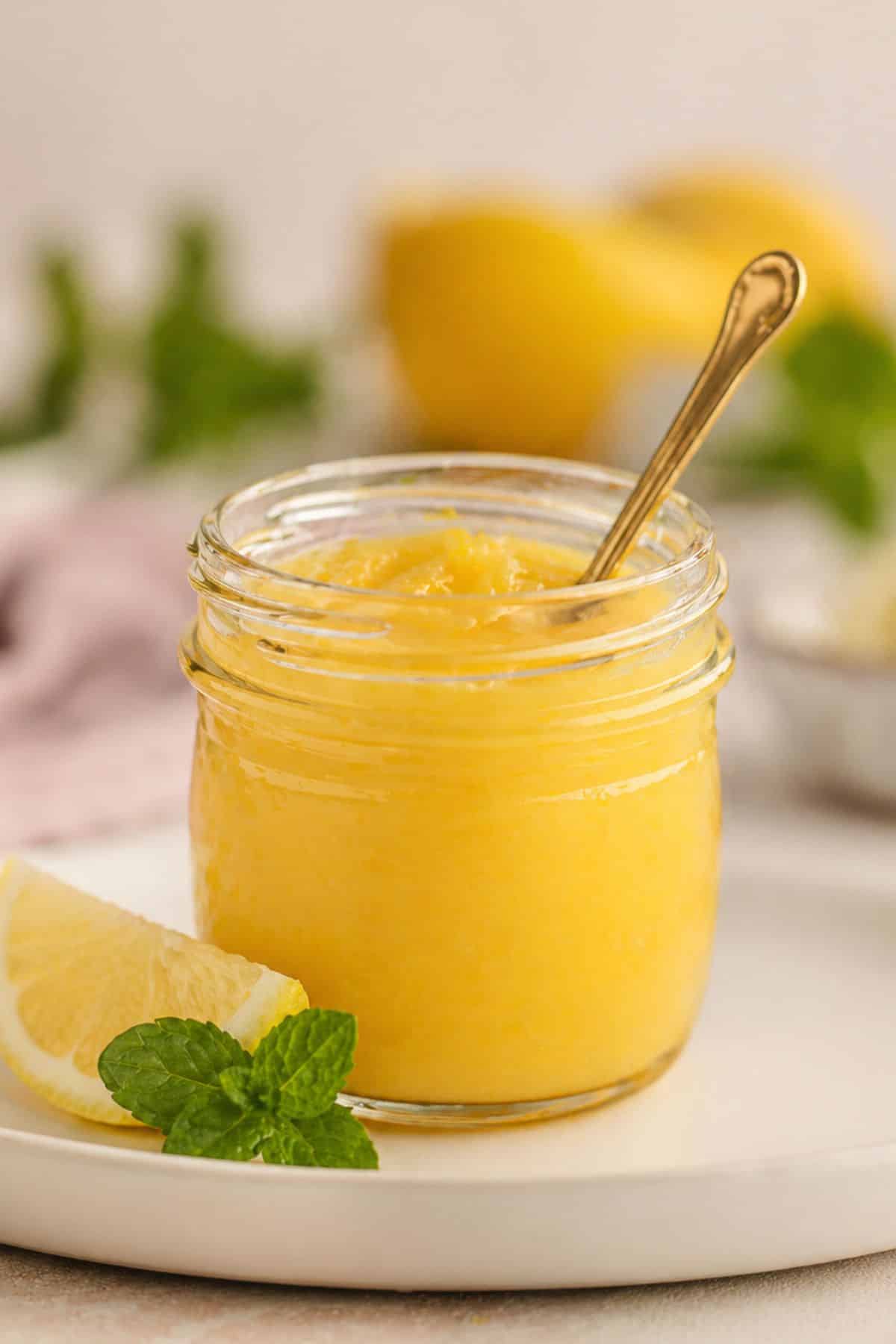
This lemon curd is rich enough to spread on toast and sturdy enough to hold its shape between cake layers. Made with egg yolks, fresh lemon juice and zest, sugar, and cold butter, it comes together in one pot in about 20 minutes.

Note from Erin
I bought lemon curd from the store years ago because everyone raved about it. It was overly sweet and flavorless, and I didn't get the appeal.
Then I photographed a lemon curd recipe for a client and tasted what it was actually supposed to be. A few years later, I had it with clotted cream on biscuits at a tea in England, and now I'm kind of obsessed.
Helpful Ingredient Tips
The recipe card at the bottom of this post includes the complete list of ingredients, measurements, and instructions.
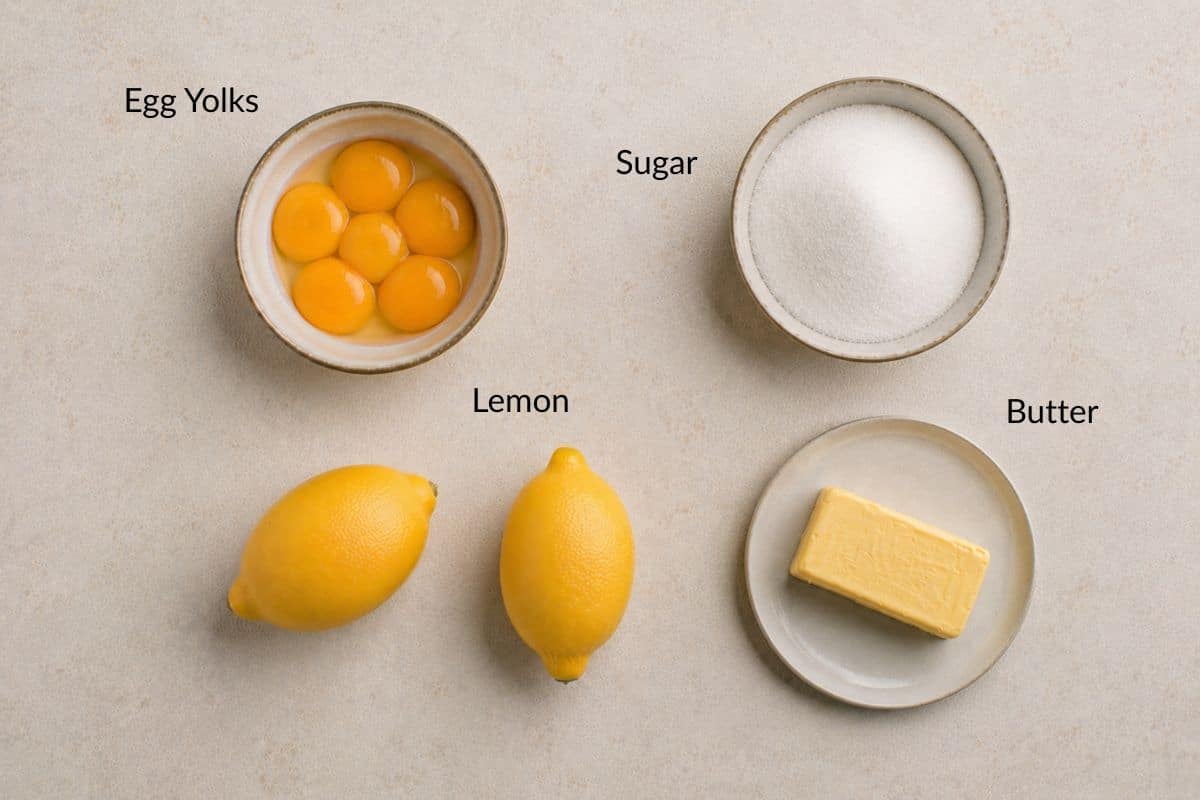
- Egg Yolks - I use yolks without the egg whites for a rich, creamy curd that doesn't taste eggy. The leftover whites freeze well for up to a year. I freeze mine in a silicone tray, one white per cube, ready for macarons or meringue.
- Lemon Juice - When I tested this recipe using bottled lemon juice, the curd came out bitter. Fresh is worth it. You can juice your lemons a few days ahead and refrigerate the juice until you are ready to make the curd.
No Double Boiler Needed
You don't need a double boiler for this recipe. A heavy-bottomed saucepan works perfectly as long as you keep the heat low and whisk continuously. That means one less dish to wash! With a thermometer or the doneness signals below, the direct stovetop method is just as reliable.
Tips for Silky Lemon Curd

Make Lemon Sugar
- The sugar turns pale yellow and smells like lemon candy when it is ready. That smell is the citrus oil releasing, and it is where most of the lemon flavor in the finished curd comes from.
Whisk Egg Yolks and Sugar
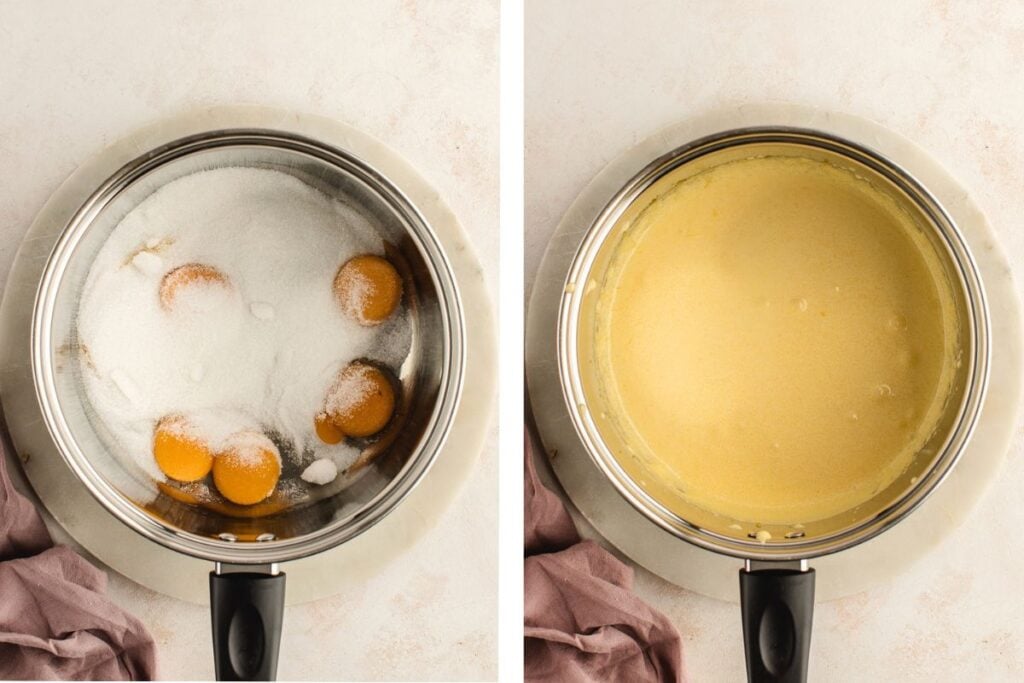
- Whisk until the mixture turns pale yellow and the sugar has dissolved into the yolks. This sounds like busywork, but it keeps your curd from getting little flecks of cooked egg.
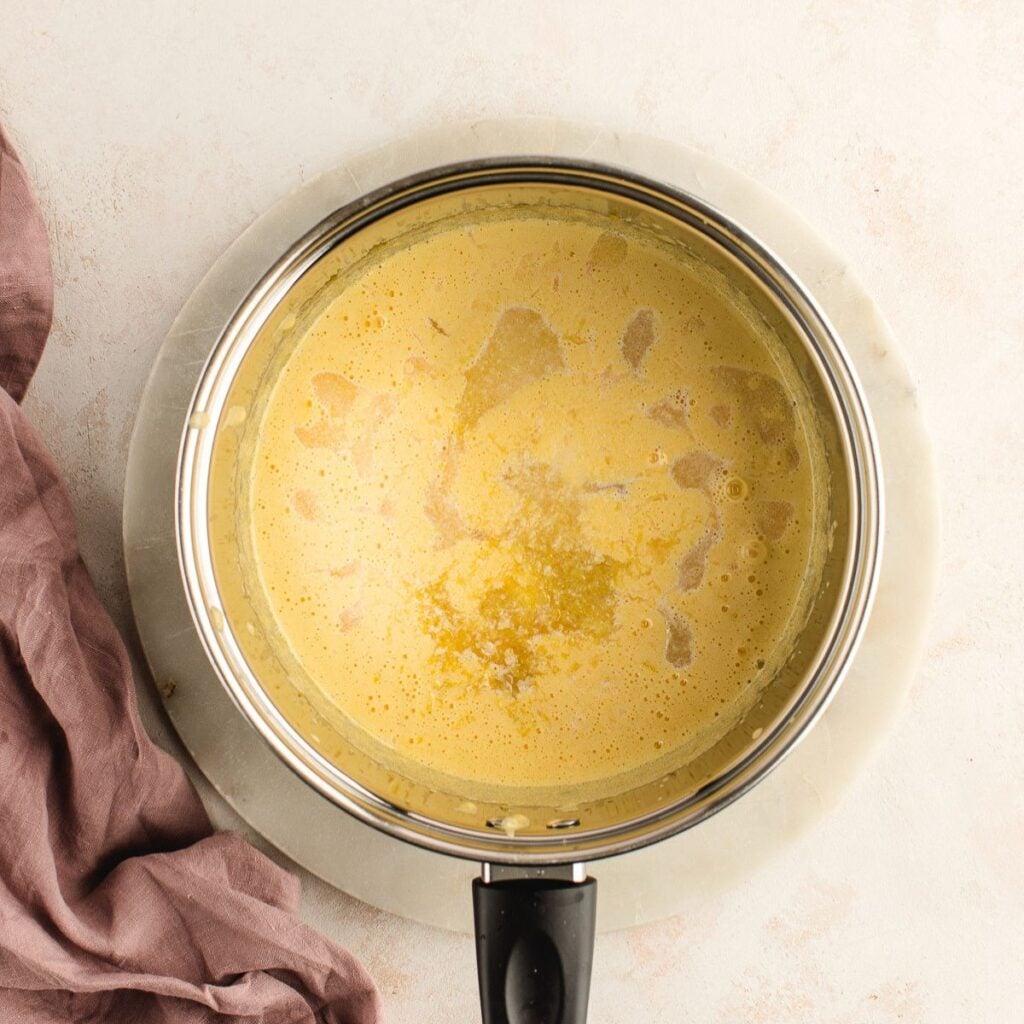
Whisk While on Low Heat
- Add the lemon juice, then put the pan on the stove.
- Low heat is the one thing that makes or breaks lemon curd. If it's too high, you'll end up with scrambled eggs in lemon juice. On my stove, I use the notch between low and medium-low.
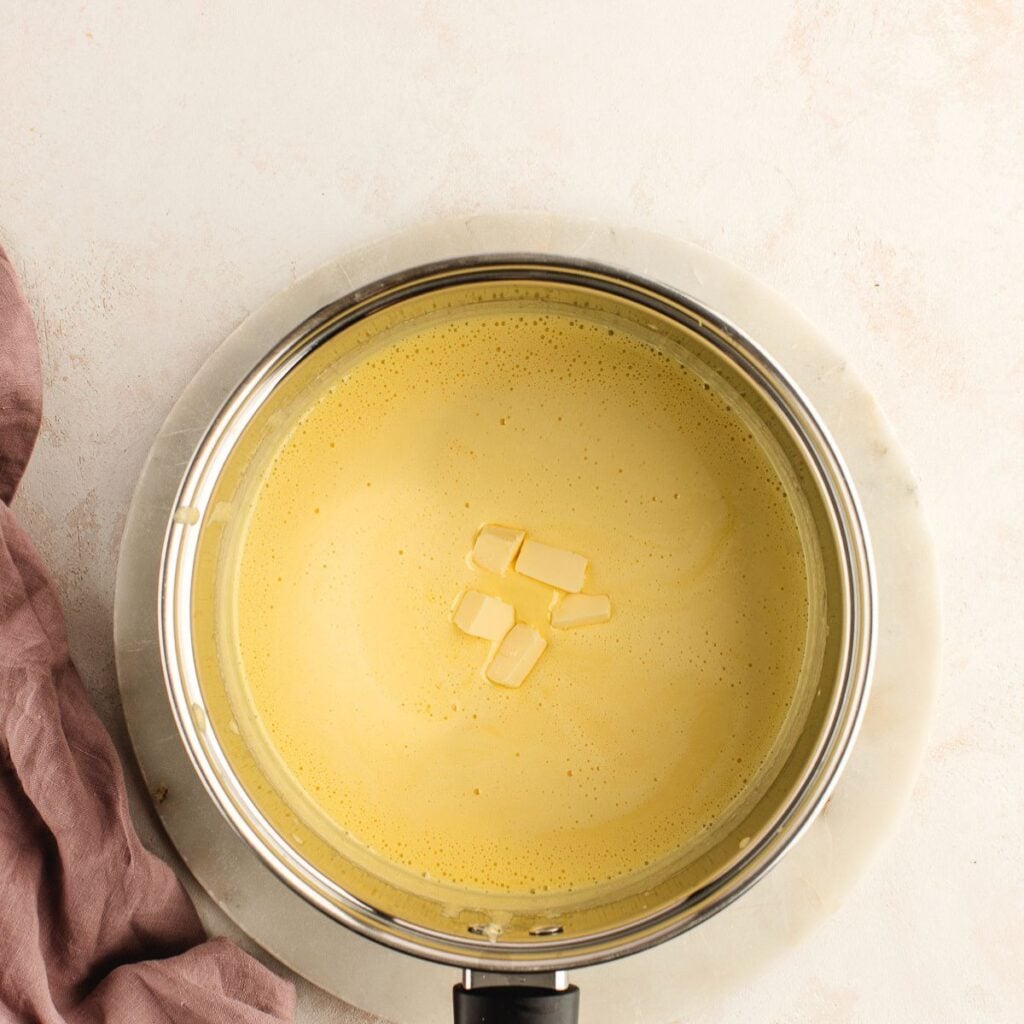
Gradually Add Cold Butter
- Each cube of cold butter lowers the pan temperature slightly, which keeps the eggs from setting too quickly and gives you a silkier curd.
- If the butter pools on top instead of incorporating, the heat is too high. Pull the pan off the burner for a few seconds and keep whisking.
3 Ways to Know Your Lemon Curd is Done
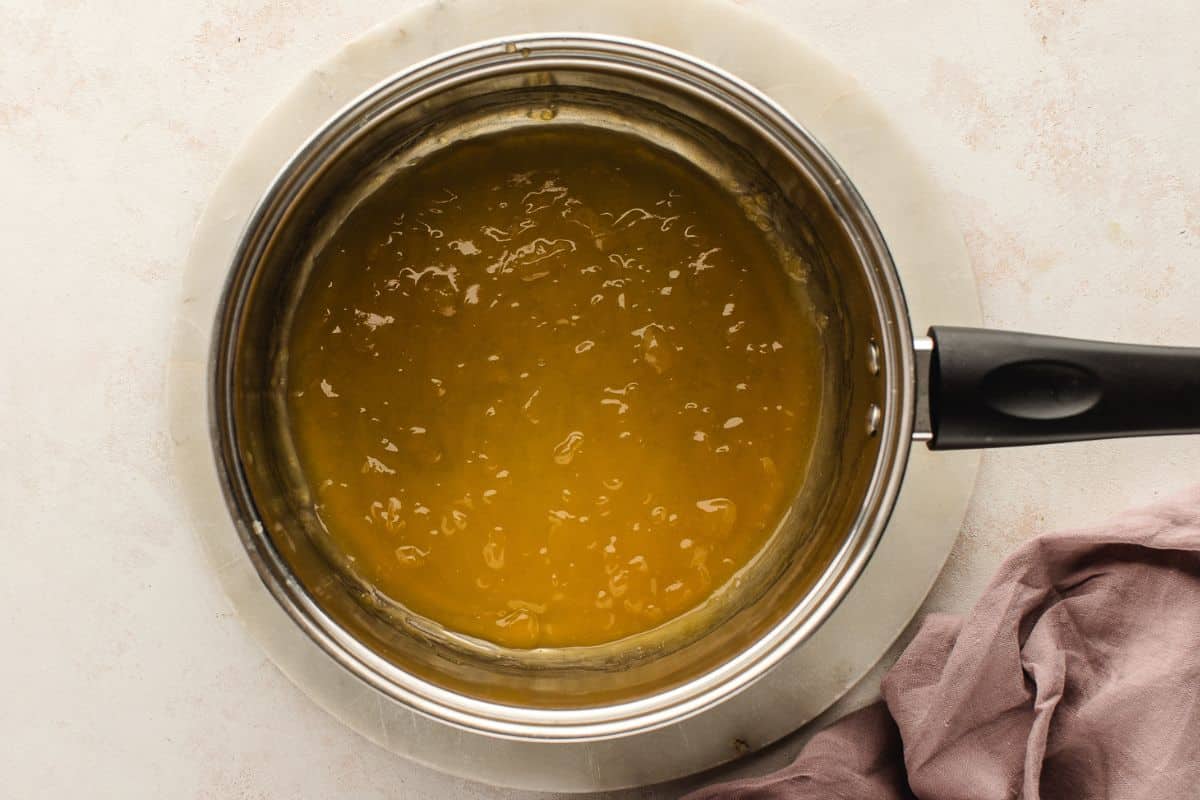
- The foam subsides. While the curd is cooking, the surface looks frothy and pale. As it thickens, that foam disappears, and the surface goes smooth and glossy. That shift is your first signal.
- It coats the back of a spoon. Dip a spoon in, lift it out, and run your finger across the back. If the trail stays clean and the curd does not run back together, it is done.
- A thermometer reads 170°F (77°C). This is the most reliable signal. Pull the pan off the heat the moment it hits 170°F. Above 180°F (82°C), the eggs start to curdle, and you get a grainy curd.
The curd will thicken more as it cools. Do not chase a thicker texture on the stove, or you will overcook it.
WANT TO SAVE THIS RECIPE?
Strain for a Silkier Finish
Straining is not required, but I prefer it. When I tested the strained and unstrained side by side, the flavor was identical. The texture is what changes. Straining catches any flecks of cooked egg and removes the zest, resulting in a silkier curd that pipes cleanly into a cake.
Try it with Other Citrus
This recipe works with almost any citrus. Lime, orange, and grapefruit all swap in for lemon at the same volume. Meyer lemons make a softer, more floral curd that is lovely on scones but a little too sweet for cake filling.
For sweeter citrus like oranges or grapefruit, keep two tablespoons of lemon juice in the mix so the curd still has some tartness. The cooking method and times stay the same.
Ways to Use Lemon Curd Spread
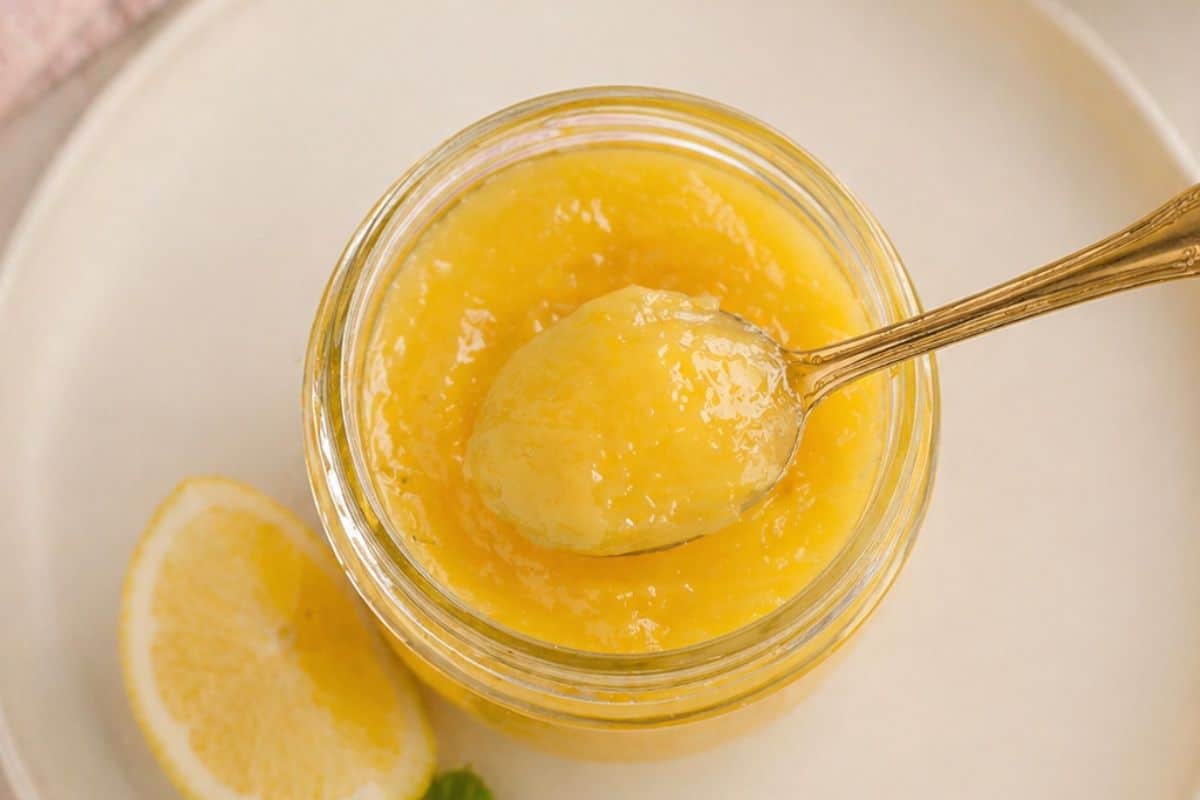
When I have a jar of lemon curd in my fridge, it doesn't last long. I love it on a warm biscuit with a little butter, which is a Texas spin on what the English do with scones. It's also great on pancakes and waffles.
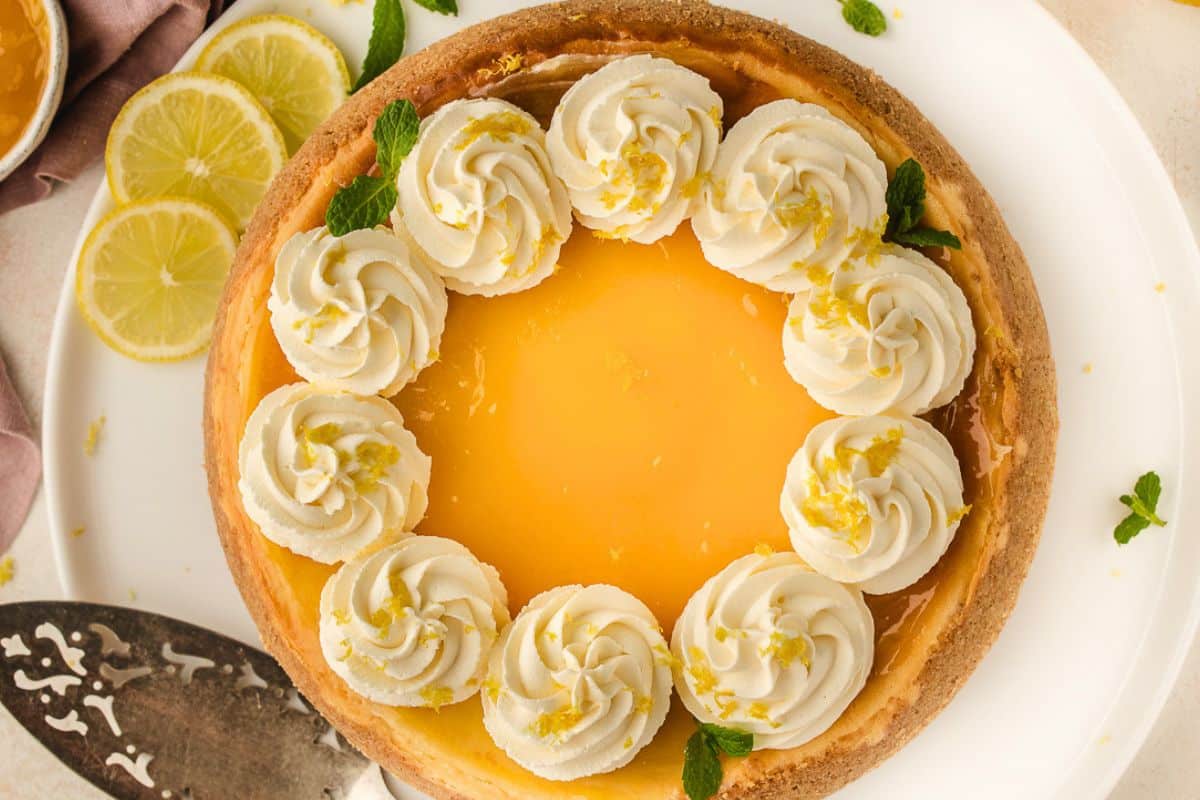
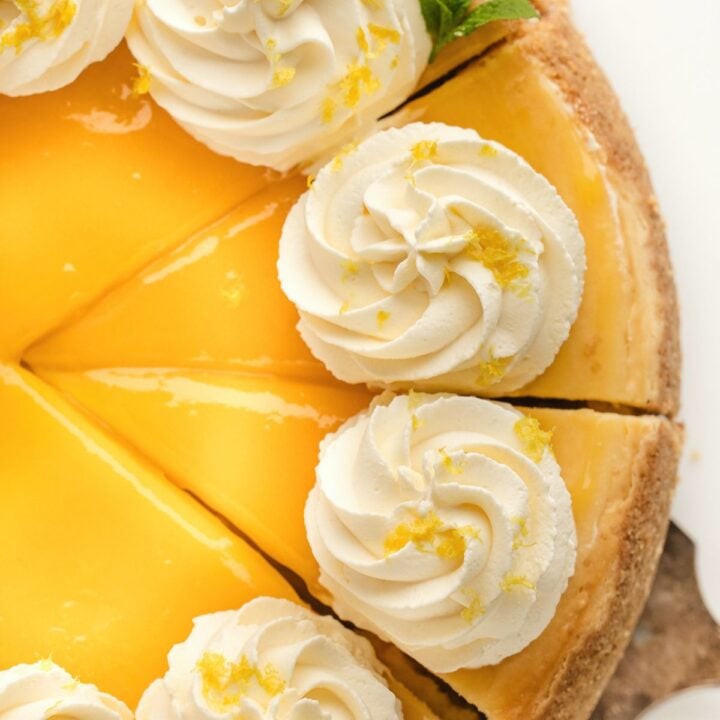
The most obvious use is my lemon curd cheesecake, where it goes both into the filling and on top. Lemon lasagna is a no-bake layered dessert that uses pudding, but the curd works as a swap (the recipe notes walk you through it).
And Thumbprint cookies are an easy entry point if you have never baked with curd before. Just fill the divet in the dough with a small spoonful of curd, and bake.
Recipe
Lemon Curd
Recipe by:Ingredients
- 6 (102 grams) large egg yolks
- 1 cup (200 grams) granulated sugar see recipe notes
- 1 tablespoon (6 grams) lemon zest finely grated
- ½ cup (120 ml) fresh lemon juice
- 8 tablespoons (113 grams) butter cold and cut into small cubes
Instructions
- Add the egg yolks and sugar to a medium saucepan and whisk vigorously for 1 minute, until the mixture lightens and thickens slightly.6 large egg yolks, 1 cup granulated sugar
- Add the lemon juice and zest, then whisk until fully combined.1 tablespoon lemon zest, ½ cup fresh lemon juice
- Place the saucepan over very low heat (on my stove, I used the notch in between medium-low and low) and whisk continuously. The mixture will warm gradually, start to thicken, and look slightly frothy.
- After about 2 minutes, begin adding the cold butter a few cubes at a time. Continue whisking constantly so the curd does not burn on the bottom.8 tablespoons butter
- Once the butter has melted, continue to whisk the mixture while cooking for an additional 5–8 minutes, keeping the heat low and steady. Do not let it boil.
- Remove the pan from the heat. For a silkier curd, strain through a fine-mesh sieve before transferring to a jar, then press plastic wrap directly onto the surface to prevent a skin from forming, and cool completely.
Notes
If your lemon curd is still runny even after chilling overnight, it probably came off the heat too early. You can rescue it by returning it to a saucepan on low heat and whisking until it reaches 170°F, then chilling again.
WANT TO SAVE THIS RECIPE?
Nutrition
The nutritional facts provided are only estimates. The accuracy of the nutritional information for any recipe on this site is not guaranteed.

Comments
No Comments