
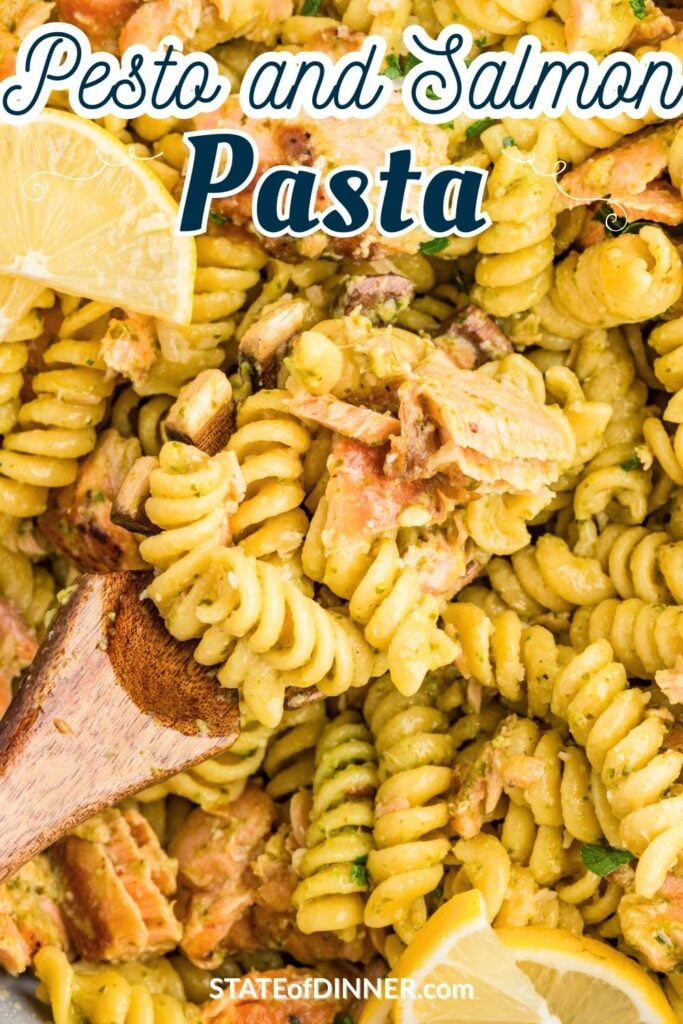
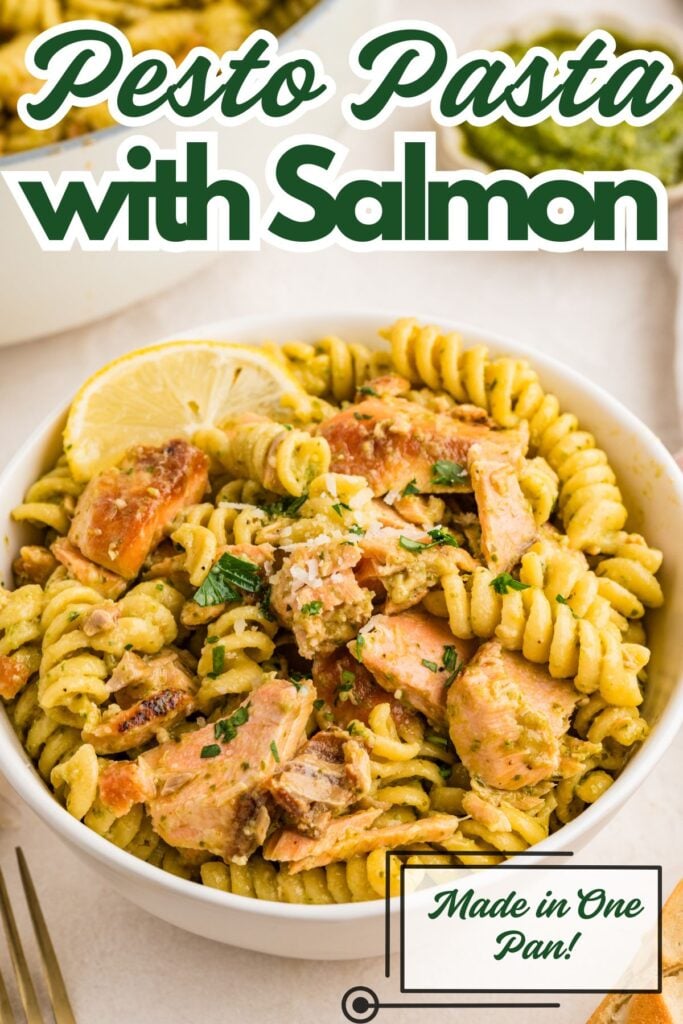
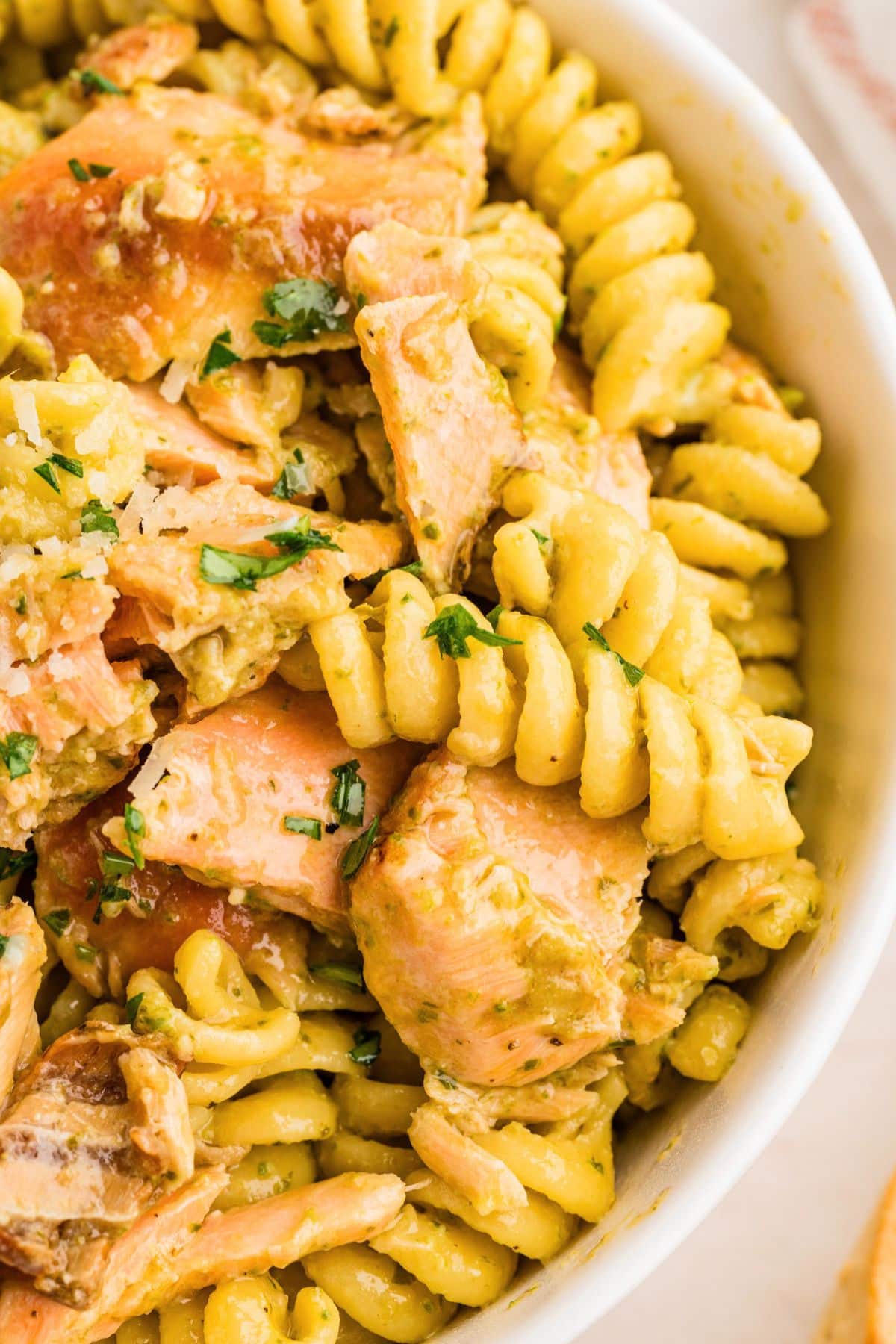
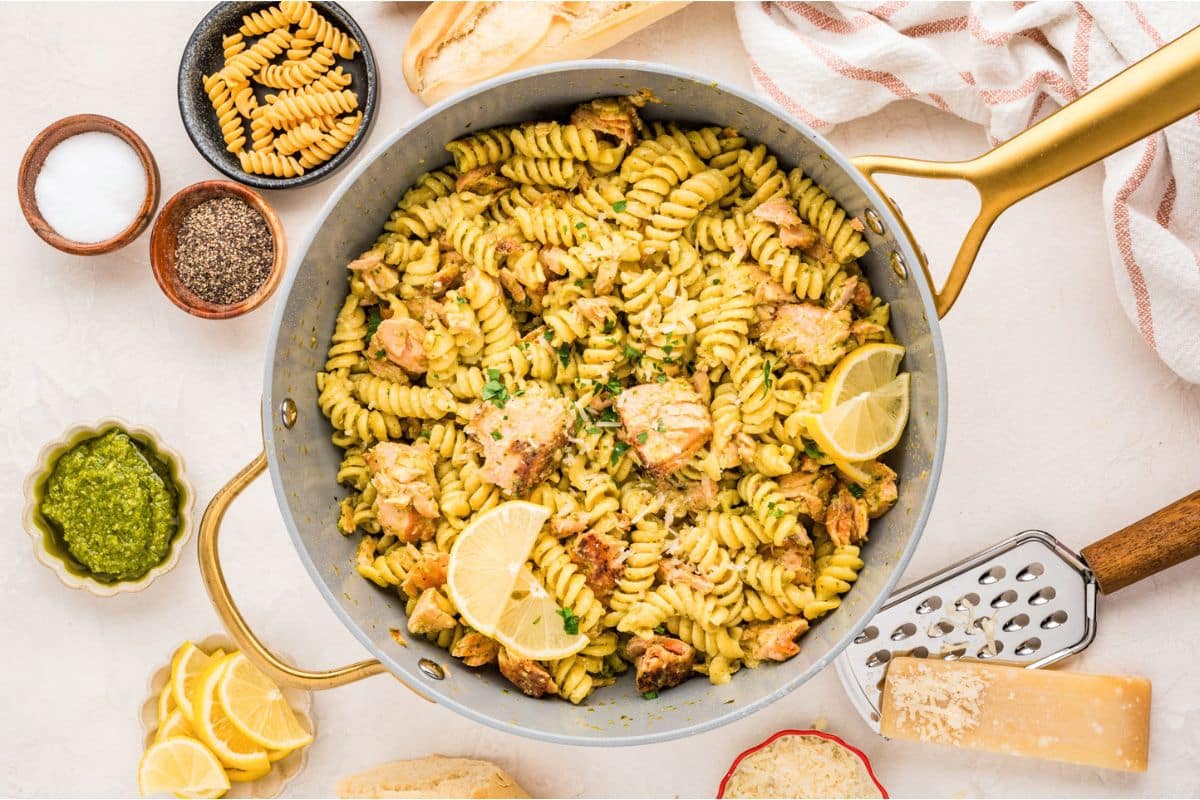
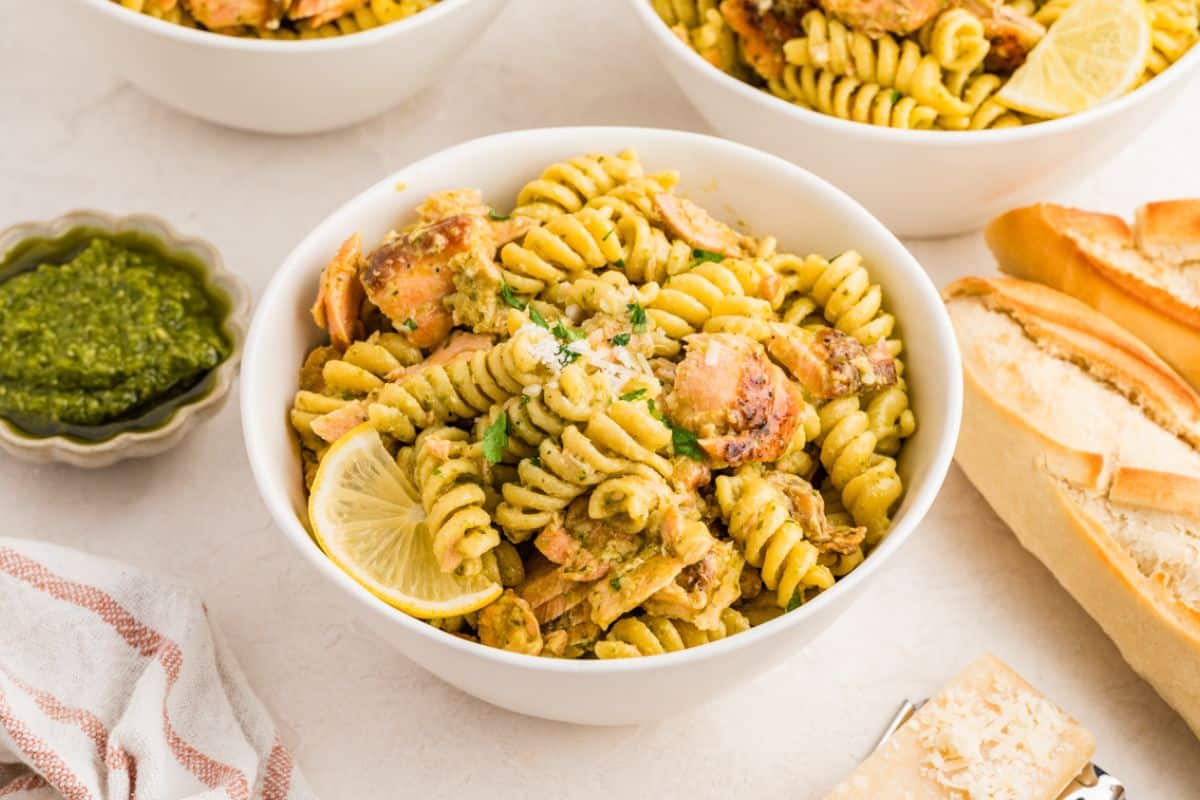
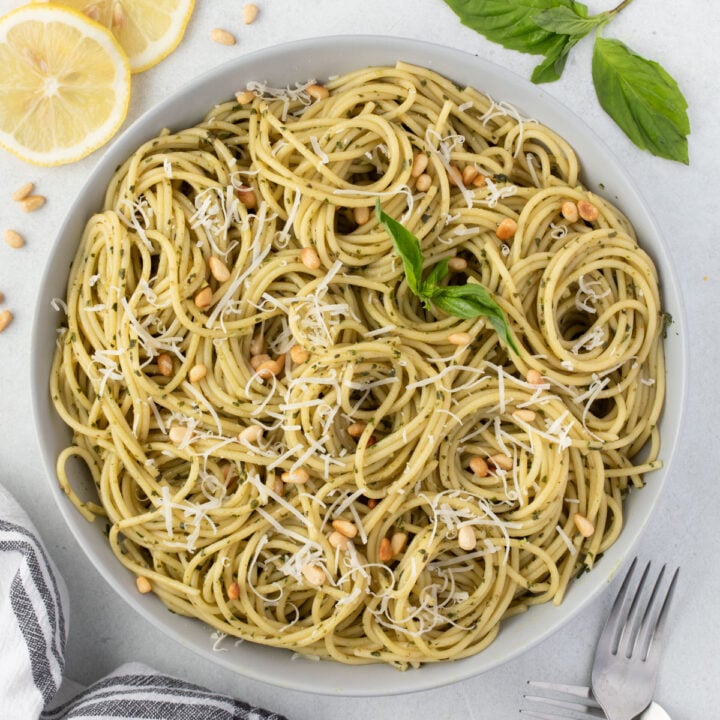
This Creamy Salmon Pesto Pasta turns flaky pan-seared salmon into a rich, restaurant-style dinner in 30 minutes. The sauce comes together with jarred or homemade pesto, cream, and Parmesan while the pasta cooks, so dinner's on the table fast.

Note from Erin
I'll be honest, salmon isn't my family's favorite, but we eat it anyway because it's good for us, and recipes like this make eating fish easier.
The creamy pesto sauce softens the salmon flavor, and the leftovers are genuinely good cold the next day, making it an easy win for lunch the day after.
Helpful Ingredient Tips
The recipe card at the bottom of this post includes the complete list of ingredients, measurements, and instructions.
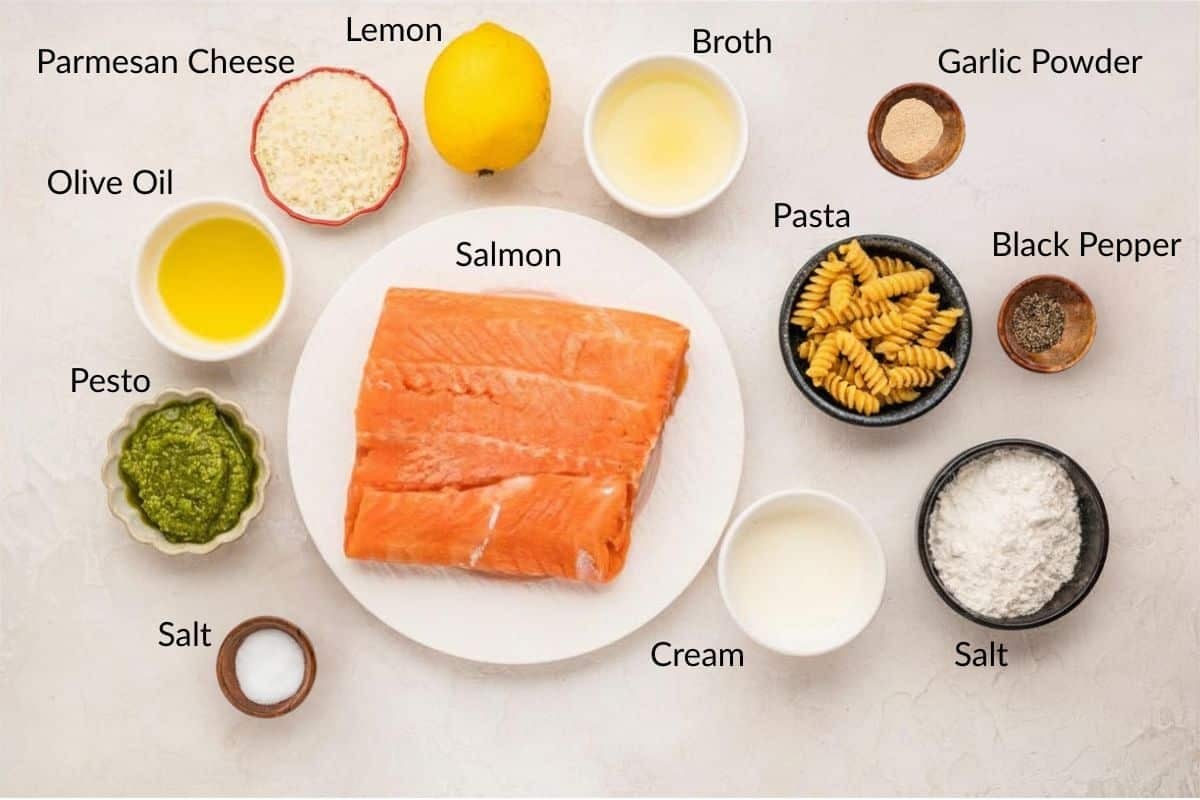
- Pesto: The pesto you use will make or break this dish. I've been disappointed by so many store-bought pestos, but the Kirkland brand from Costco is really delicious. Making your own is pretty simple, too, and my Basil Cashew Pesto gives you great flavor.
- Salmon: If all you have is skin-on salmon, that works. Sear it first, then gently peel the skin off before breaking it into pieces. Sometimes I like using hot-smoked salmon for added smokiness, which is really nice in this dish.
- Heavy Cream: Stick with full-fat heavy cream. I know half-and-half feels like a reasonable swap, but it can curdle when it meets the lemon juice in the hot sauce, leaving you with a grainy sauce.
- Parmesan Cheese: I always shred my own from a block. The pre-shredded kind doesn't melt as smoothly, and you can feel the difference in the sauce.
Step-By-Step Tips to Make Creamy Salmon Pasta
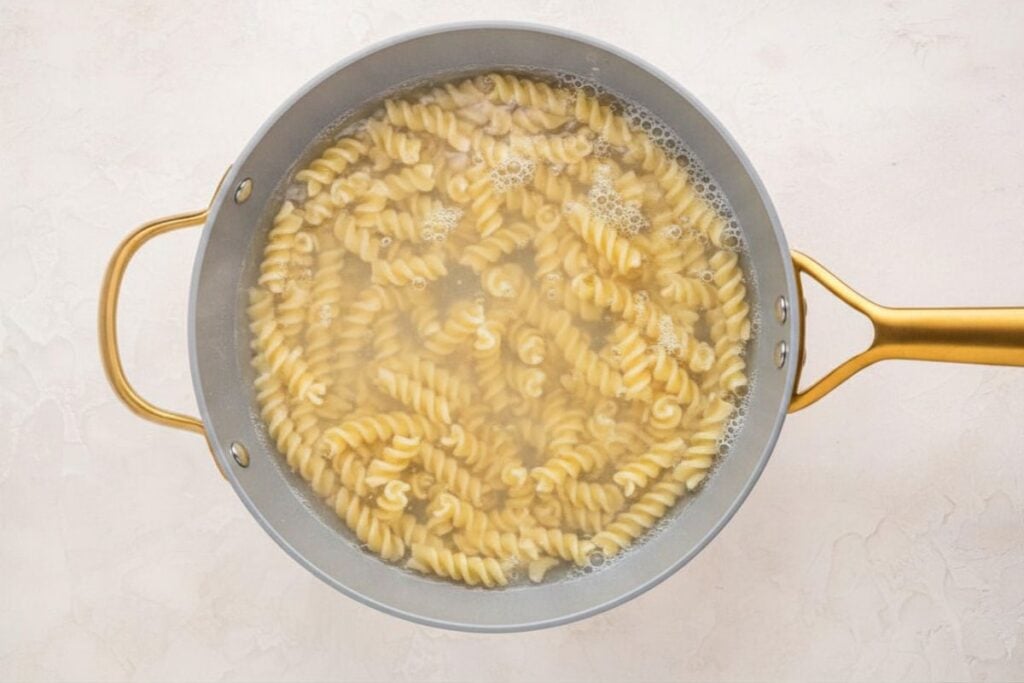
Cook the Pasta
- Start the pasta water before anything else. Once it's boiling and the pasta is in, you'll have just enough time to season the salmon, build the sauce, and toss it all together.
- Reserve the full ½ cup of pasta water, even if you don't think you'll need it. The sauce thickens as it cools, so a splash of pasta water near the end keeps it loose and silky.
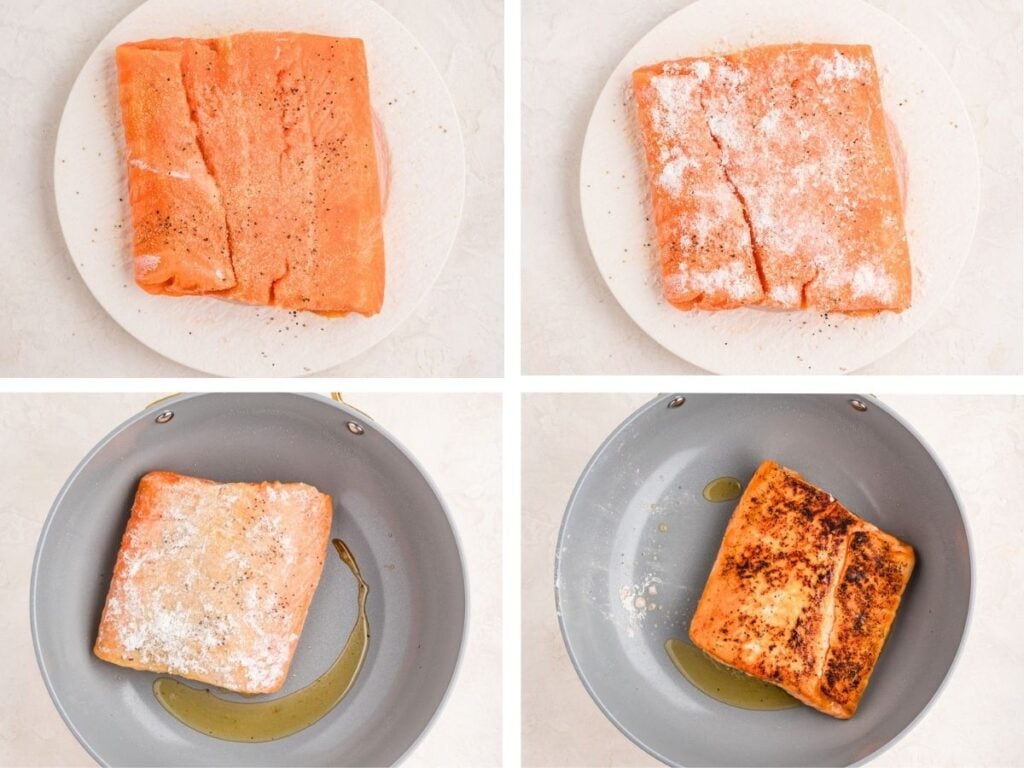
Sear the Salmon
- The salmon is done when the sides have turned opaque about halfway up the fillet, and the surface flakes when you press it gently with a fork.
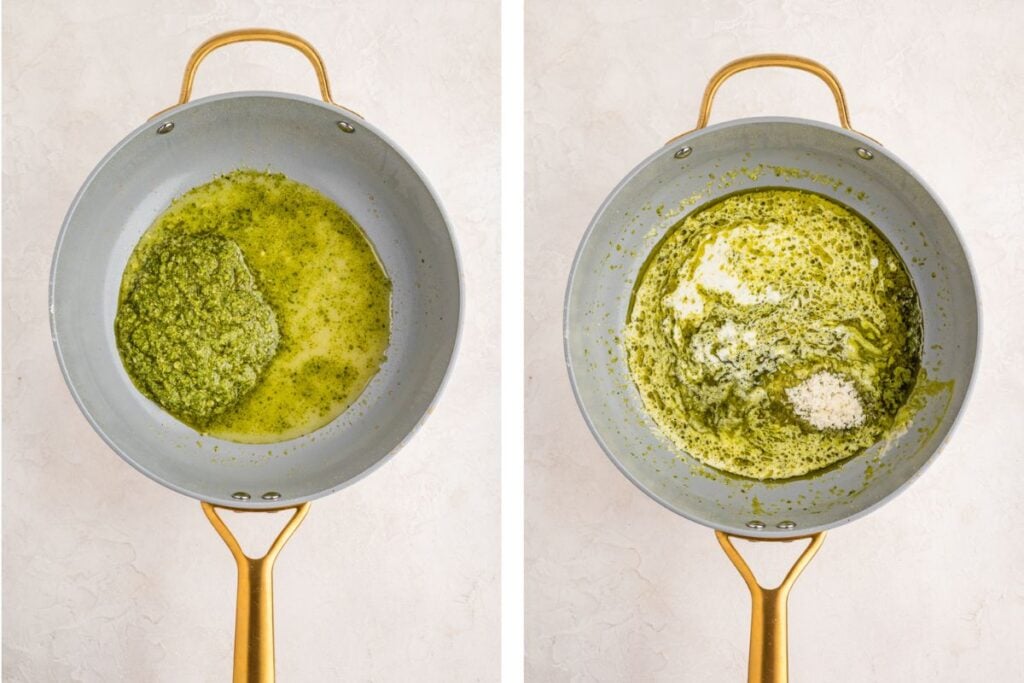
Make the Sauce
- Let the cream, Parmesan, and lemon juice cook together for the full 2 to 3 minutes so the sauce reduces and thickens enough to coat the pasta. Rushing this step is the most common reason the sauce turns out thin.
- Taste before adding extra lemon. Some jarred pestos are already lemony.
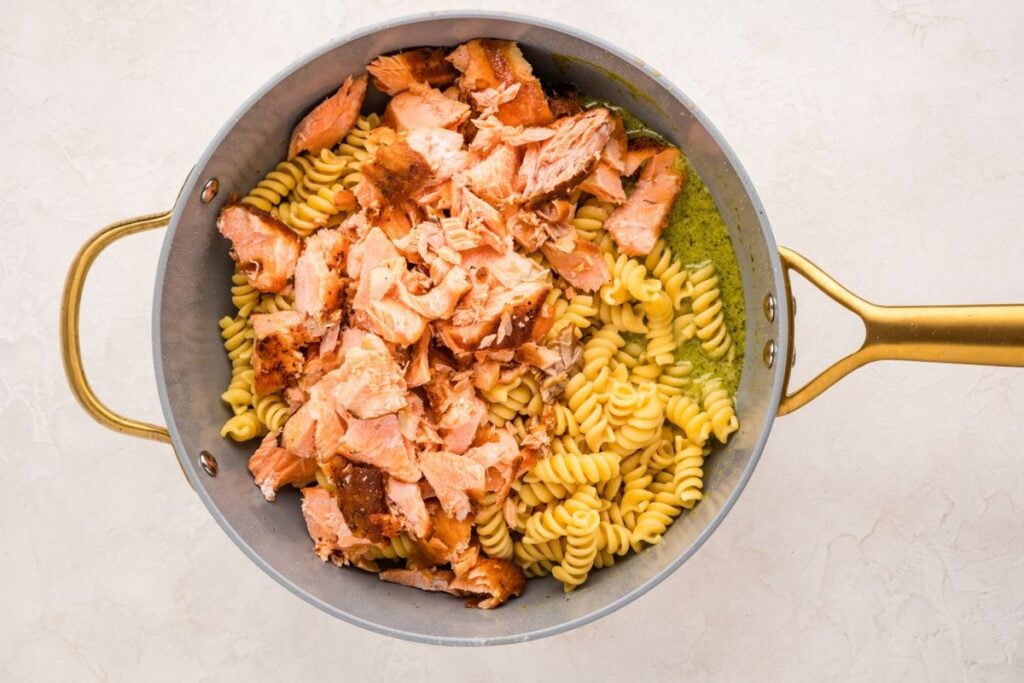
Toss Everything Together
- If the sauce isn't coating the pasta smoothly, add reserved water a tablespoon at a time. You want every piece coated, but not swimming in the sauce.
WANT TO SAVE THIS RECIPE?

Top Tip!
Before the cream goes in, turn the heat down to medium. The cream needs to simmer gently or it'll break when the lemon juice is added.
Easy Vegetable Add-Ins
Asparagus is my favorite addition! Chop one bunch into bite-sized pieces and toss it into the pasta water for the last 2 to 3 minutes of cooking. About a cup of frozen peas works the same way and just needs a quick warm-up in the hot pasta.
A cup of halved cherry tomatoes stirs in at the end for a pop of brightness, and a few handfuls of baby spinach wilt right into the warm sauce.
What to Serve With Salmon Pasta
This pasta is rich enough that a simple green salad and some crusty bread are all it needs. My Spinach Caprese Salad with Basil Balsamic Vinaigrette is a natural fit. The basil thread carries through from the pesto, and the acidic dressing cuts the richness of the cream sauce.
Recipe
Salmon Pesto Pasta
Recipe by:Ingredients
- 12 ounces (340 grams) pasta uncooked
- 1 pound (454 grams) fresh salmon skin off
- ½ teaspoon (3 grams) kosher salt
- ¼ teaspoon (0.5 gram) coarse ground pepper
- ¼ teaspoon (0.75 gram) garlic powder
- ½ tablespoon (3.75 grams) flour
- 1 tablespoon (14 grams) olive oil
- ⅓ cup (59 ml) chicken or vegetable broth
- ⅔ cup (165 grams) pesto
- ⅓ cup (79 ml) heavy cream
- ¼ cup (25 grams) Parmesan cheese freshly grated
- 1 teaspoon (10 grams) lemon juice
- parsley for garnish (optional)
Instructions
- Cook your pasta according to package directions in a salted pot of water. When draining the water, reserve ½ cup of the pasta water for later. While your water boils and the pasta cooks, make the rest of the dish.12 ounces pasta
- Sprinkle the salmon with salt, pepper, and garlic powder. Then sprinkle the flour over all sides.1 pound fresh salmon, ½ teaspoon kosher salt, ¼ teaspoon coarse ground pepper, ¼ teaspoon garlic powder, ½ tablespoon flour
- Heat a large skillet or pot over medium-high heat and add the olive oil.1 tablespoon olive oil
- Cook the salmon for 3-4 minutes per side until cooked through. Remove to a plate and set aside.
- Drain the oil from the pan and reduce the heat to medium. Add the broth and pesto to the pan and cook for about a minute or 2 or until the broth is simmering.⅓ cup chicken or vegetable broth, ⅔ cup pesto
- Add in the cream, parmesan cheese, and lemon juice, and let it cook for 2-3 minutes.⅓ cup heavy cream, ¼ cup Parmesan cheese, 1 teaspoon lemon juice
- While this cooks, break your salmon into bite-sized pieces.
- Add the pasta and salmon pieces into the sauce and toss gently to coat evenly. If your sauce is too thick, add a few tablespoons of pasta water until you get the desired consistency. The sauce will thicken slightly as it cools, so it’s good to save the pasta water and add an extra if you want. Taste and see if you want an extra squeeze of lemon juice.
- Garnish with parsley and more Parmesan, if desired.parsley
Notes
- If you use table salt, use only about ¼ teaspoon.
- The flour on the salmon helps it brown nicely in the pan. Skip it for a gluten-free version, and pat the salmon extra dry so it still picks up color.
- If you're not using a non-stick skillet, you'll get some brown bits from the salmon. Those add flavor to the sauce, so don't wipe the pan unless they look black or smell burnt.
- Gluten-free and high-protein pastas (chickpea, lentil, edamame) work well here. Pull them a minute shy of al dente since they keep softening once tossed with the sauce.
- Store leftovers in an airtight container in the fridge for up to 3 days. The pasta is genuinely good cold the next day, which makes a nice lunch.
- This dish doesn't freeze well. The cream sauce separates, and the pasta texture turns mushy when it thaws.
WANT TO SAVE THIS RECIPE?
Nutrition
The nutritional facts provided are only estimates. The accuracy of the nutritional information for any recipe on this site is not guaranteed.
Kimberly says
This recipe impressed my family! I served it with rosemary sourdough bread, and everyone loved it. My teenage son can be picky, but he asked for a second serving. The sauce to noodle ratio was perfect. I hadn't used a dusting of flour to sear salmon before, but it worked well to give the fish a nicely browned surface and slightly crispy exterior. The flavor of the pesto sauce worked beautifully with the salmon. (I used the very good cashew pesto recipe from this site in the sauce.)
Erin Gierhart says
That means so much, Kimberly! I know how difficult it can be to find a dish that the whole family enjoys, and I am thrilled everyone liked this one!
Connie Comstock says
This dish was incredible and a hit with my family. We love salmon but the pesto helps cut the fishy taste of the salmon if you're not a total seafood lover like me. This recipe will be in my meal rotation. So quick to make for those evenings when you're tired or short on time.
Erin Gierhart says
Thank you, Connie! I’m so glad this earned a spot in your meal rotation.